
Skip to content

About Shikha Walia

Shikha Walia has been a mother, a teacher, a housewife and an artisan, often in the same day. The crochet is the part strangers see. What she brings to it is attention. She notices a row that sits one stitch out of line. She notices a colour that goes flat under a different light. She notices a strap that will lose its shape in a year. Most of what she makes is pulled apart at least once before anyone else sees it. That is the difference between work that is good and work you keep. Anyone can follow a pattern. Very few people will undo an evening of it because one row bothered them. She has no factory, no team and no production line. She has a hook, a basket of yarn, and the patience to spend several days on one piece. That is the whole operation.
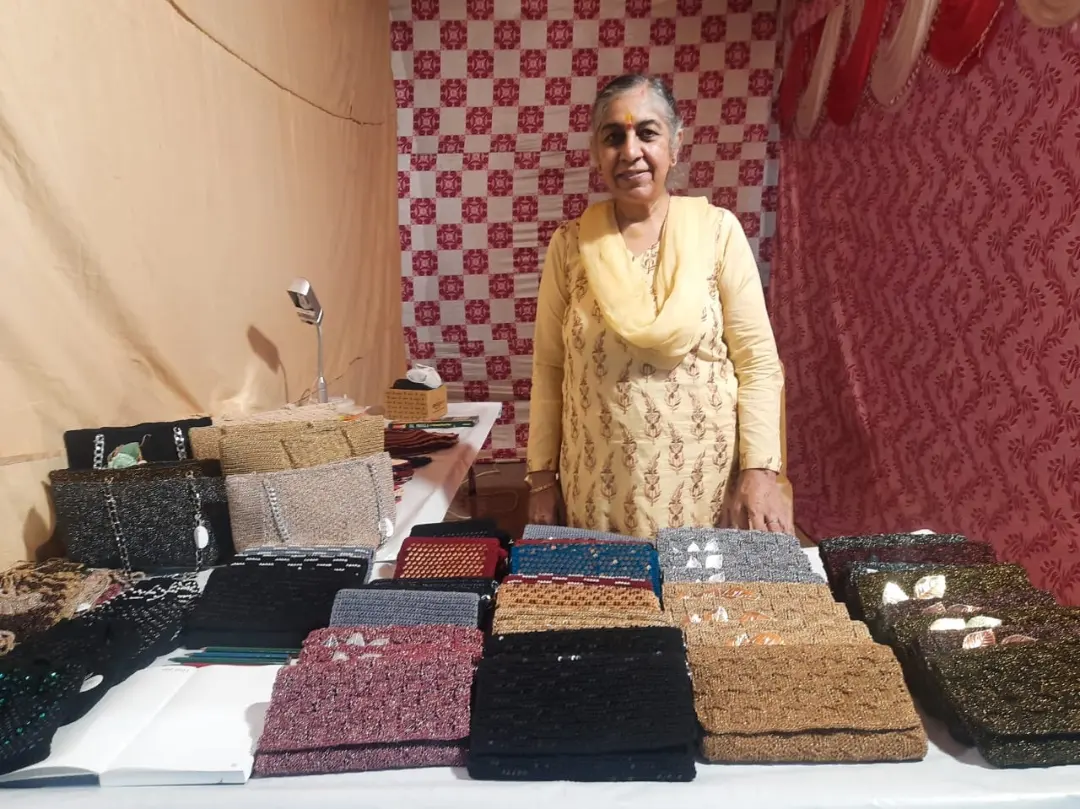
Shikha standing behind her exhibition table, rows of her clutches in front of her.

Four steps

How a piece is made

  1. 01

    A conversation

    It starts with what you have in mind. A colour, a size, an occasion, or a piece you saw and liked.

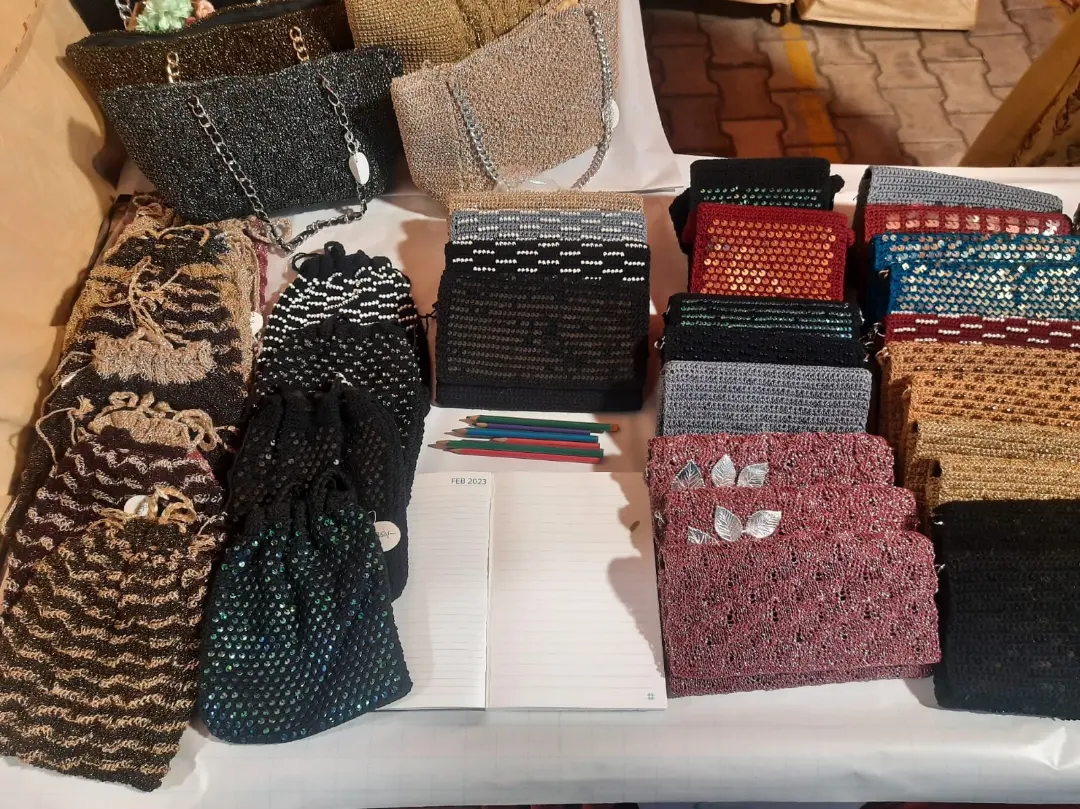
    Rows of finished clutches on her exhibition table, every one a different colour and stitch.
  2. 02

    The yarn and the stitch

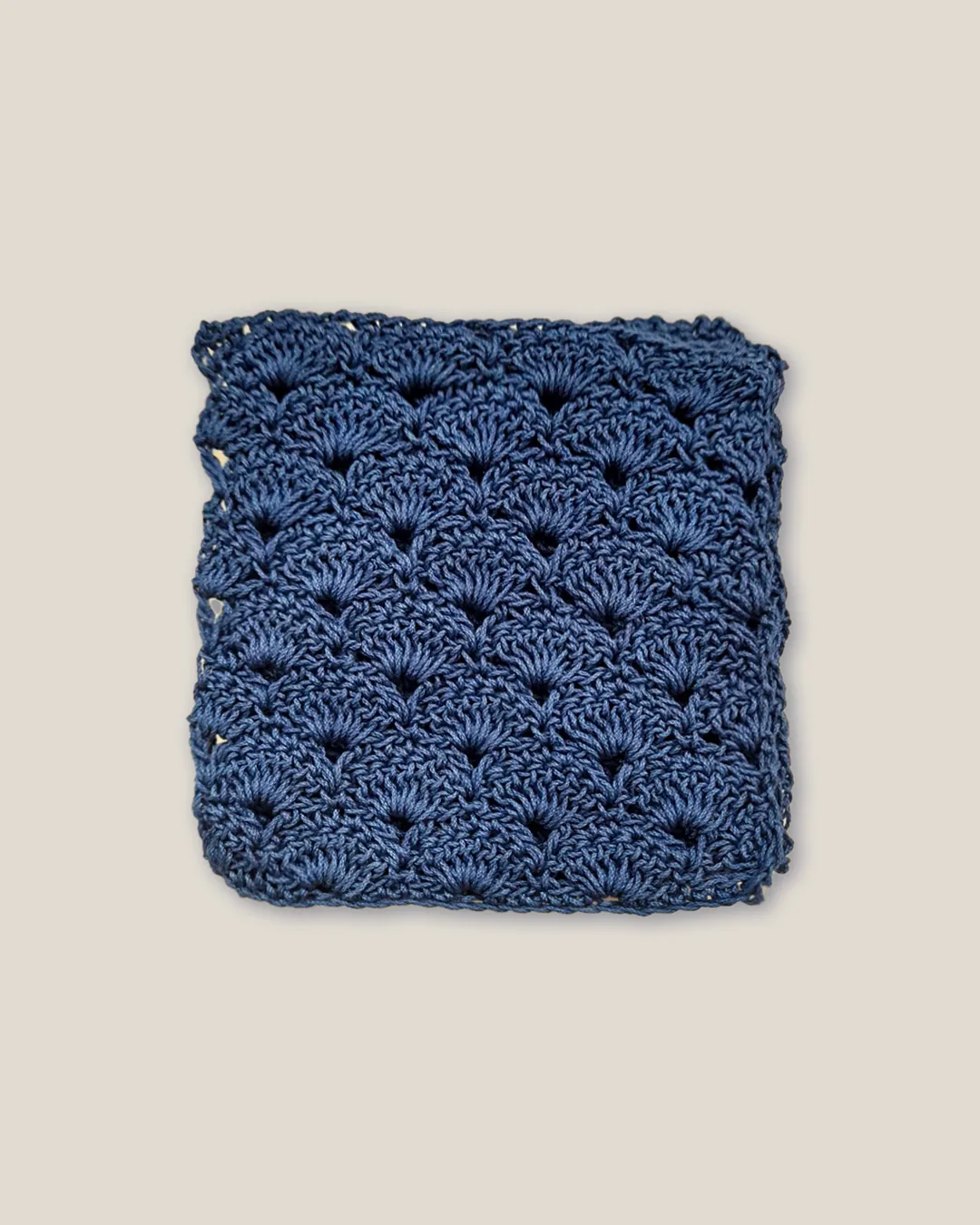
    She picks the yarn first, then the stitch pattern, because the two decide each other. A shell stitch wants a yarn that holds its shape.

    A square of blue shell stitch, each fan overlapping the row below.
  3. 03

    Made in one pair of hands

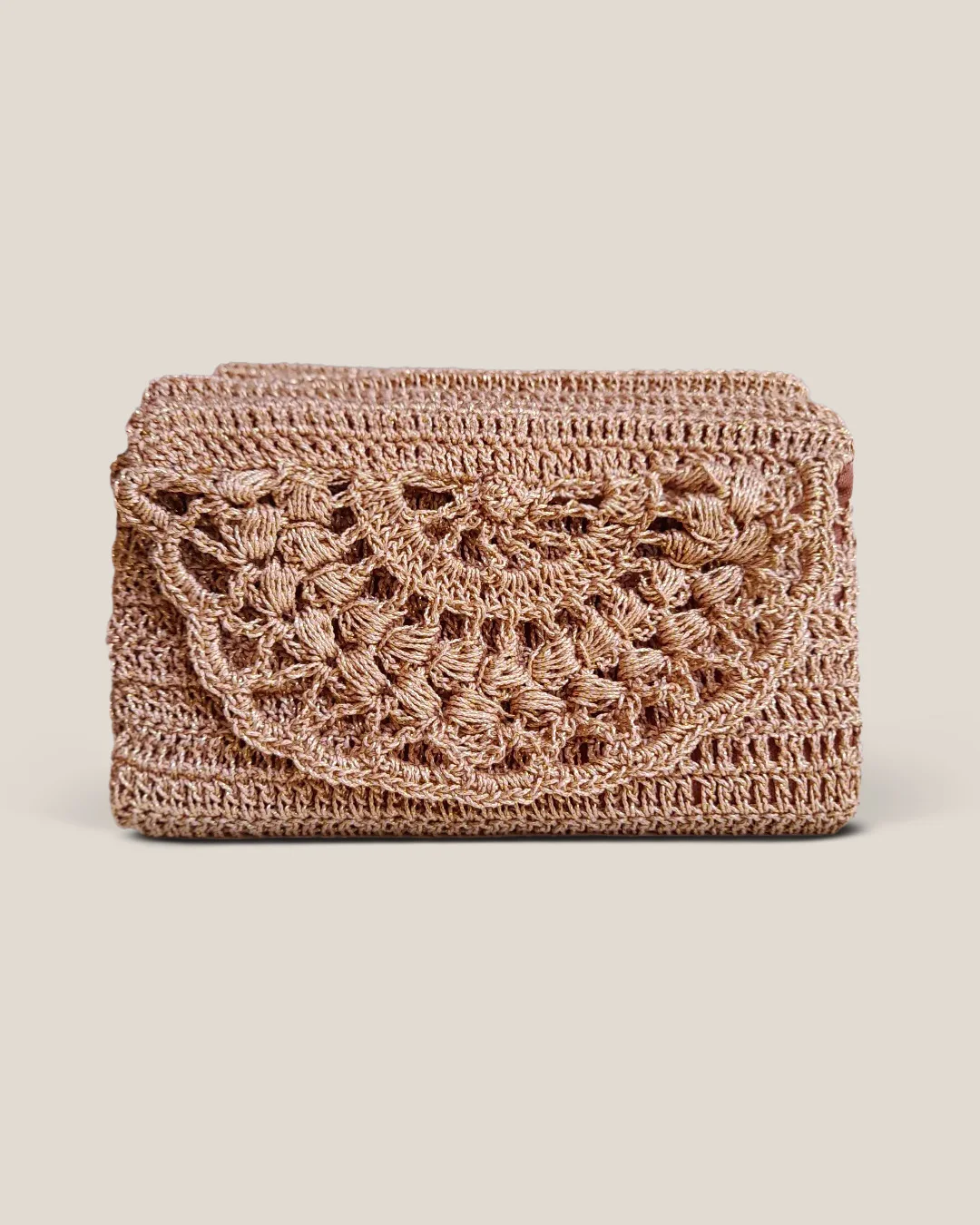
    A clutch takes a few days. A larger bag takes a week or more. Nothing is rushed and nothing is exactly the same twice.

    A rose-gold crochet clutch with a scalloped lace flap.
  4. 04

    It gets passed on

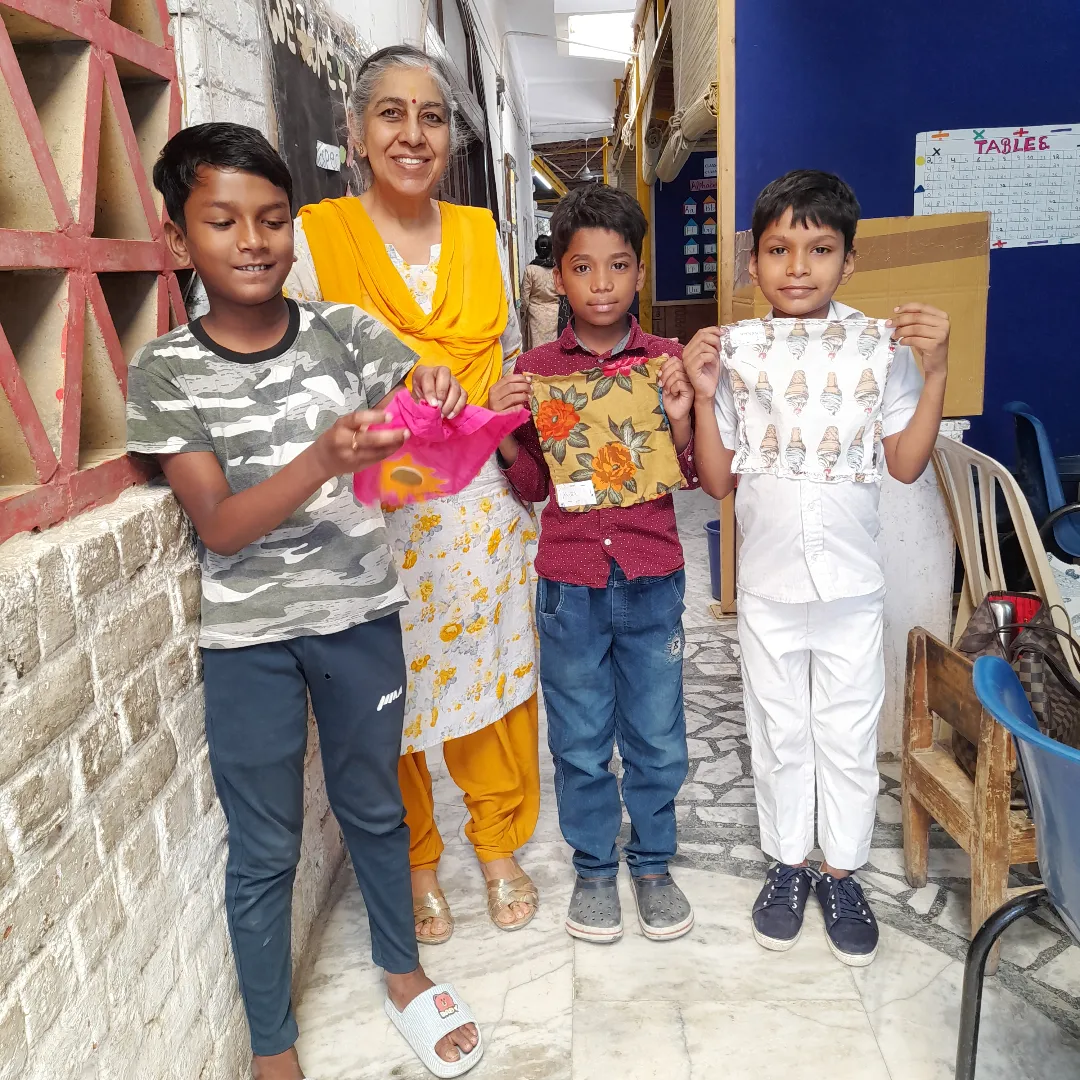
    When the last row is done, the piece is yours. No one else has one quite like it. She passes the craft on too. At Nai Disha, an education non-profit, she taught children the basics of needle and thread.

    Shikha with three children at Nai Disha, each holding a small fabric pouch.

The work itself

Six techniques, one pair of hands

The stitch is chosen before the first loop. It decides how the fabric is built, row by row. Some pieces also carry beads or sequins. These are the six techniques she works in.

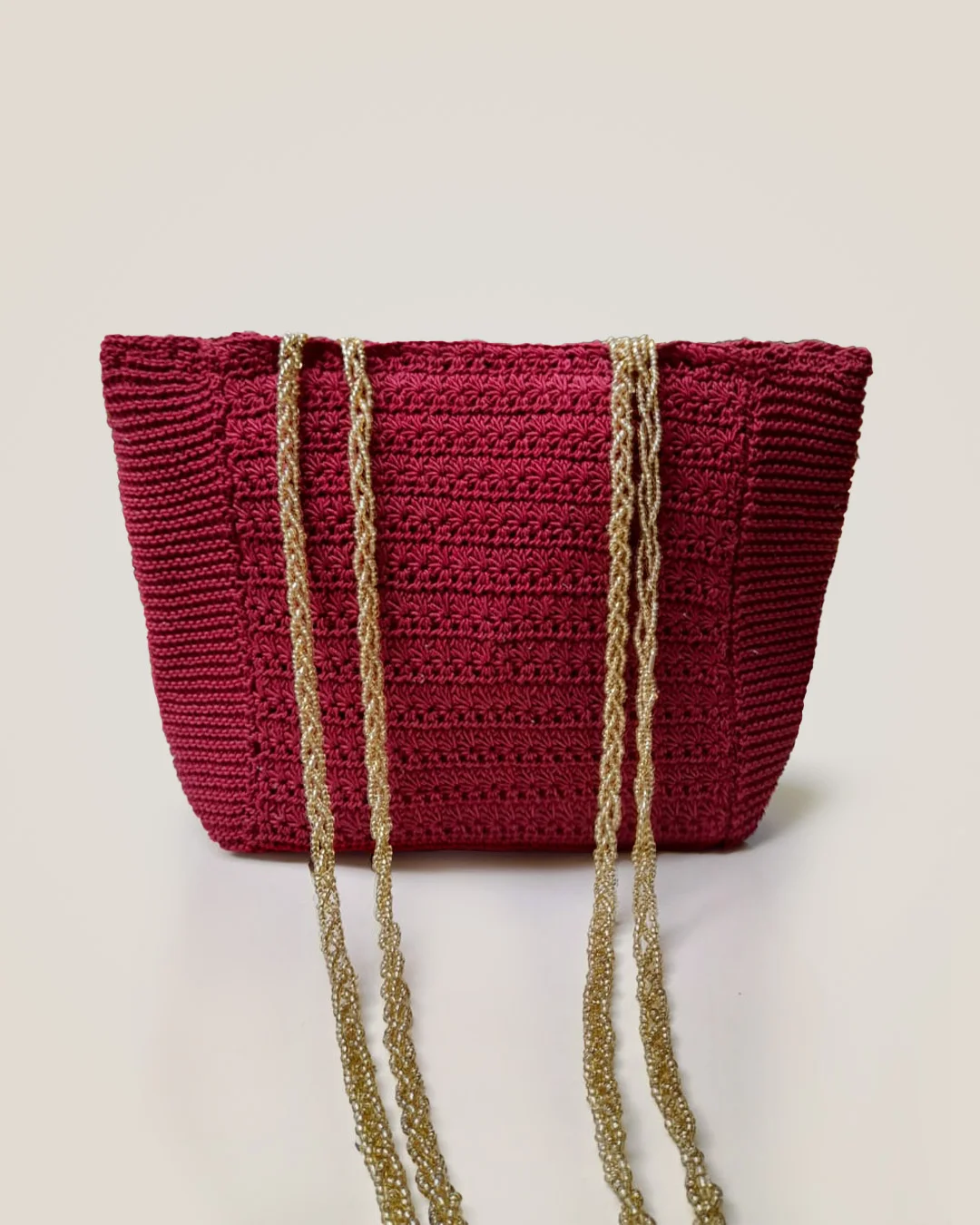
  • A deep red crochet tote worked in rows of small stars, with twisted gold straps.

    Star stitch

    Each star gathers several loops into one centre and closes them. That leaves the small hole at its heart. The rows repeat evenly across the bag.

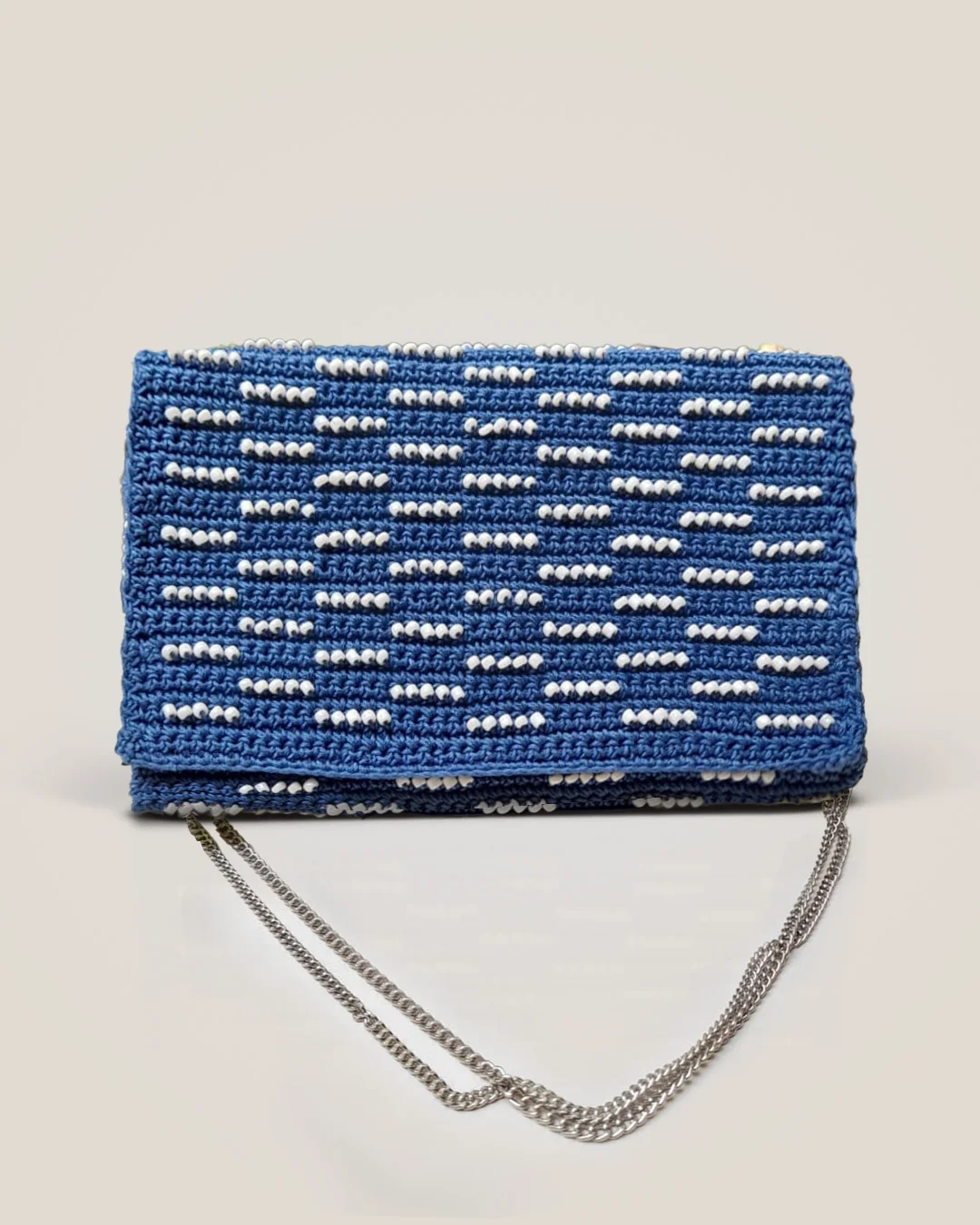
  • A cobalt-blue crochet clutch with short rows of white beads set into the fabric.

    Hand-added beads

    Every bead is added by hand, one at a time. There is no shortcut for this one.

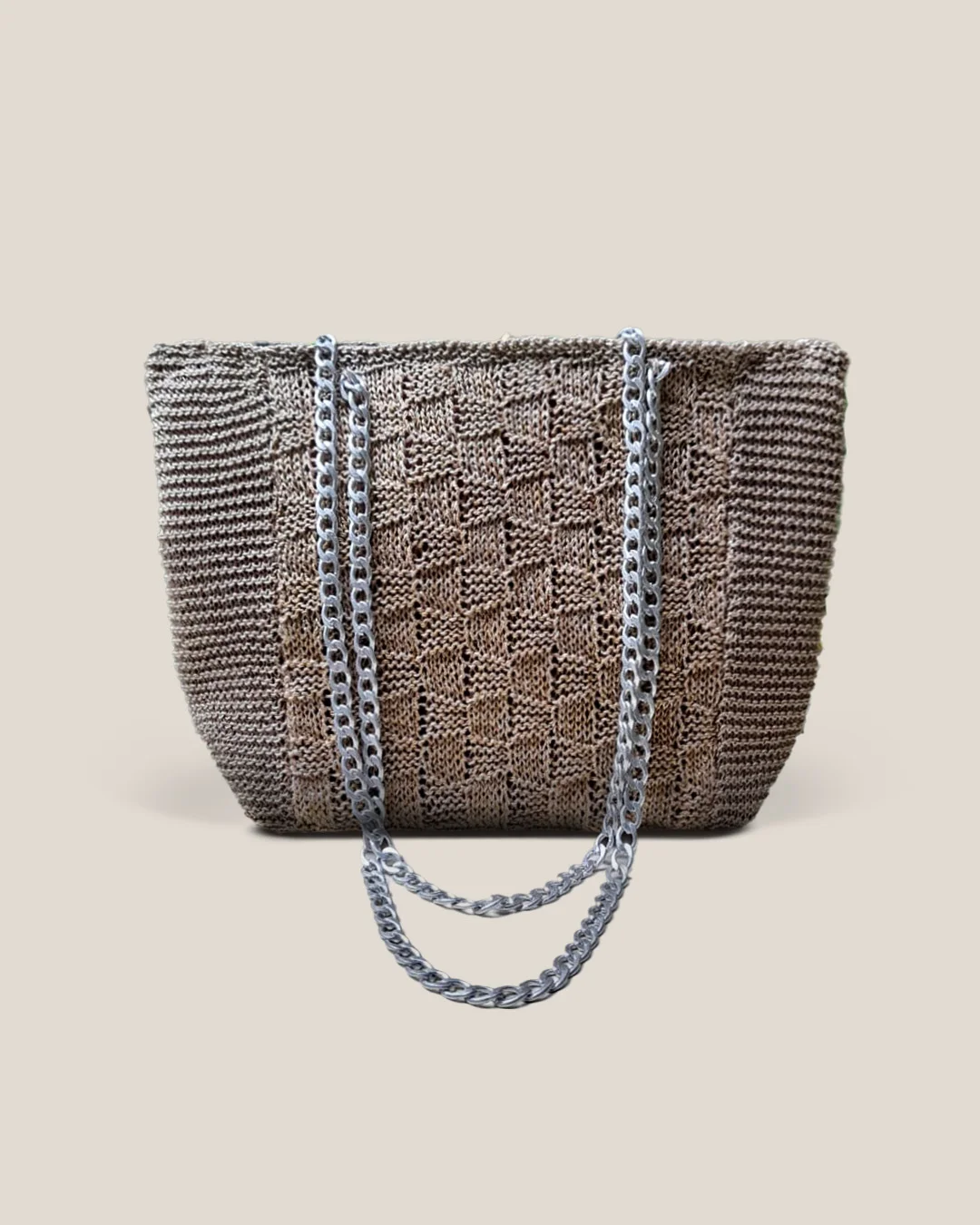
  • A taupe crochet tote with a panel of alternating raised and flat blocks.

    Checkered

    Raised and flat blocks alternate across the fabric. The pattern comes from the stitches themselves, not from a second colour.

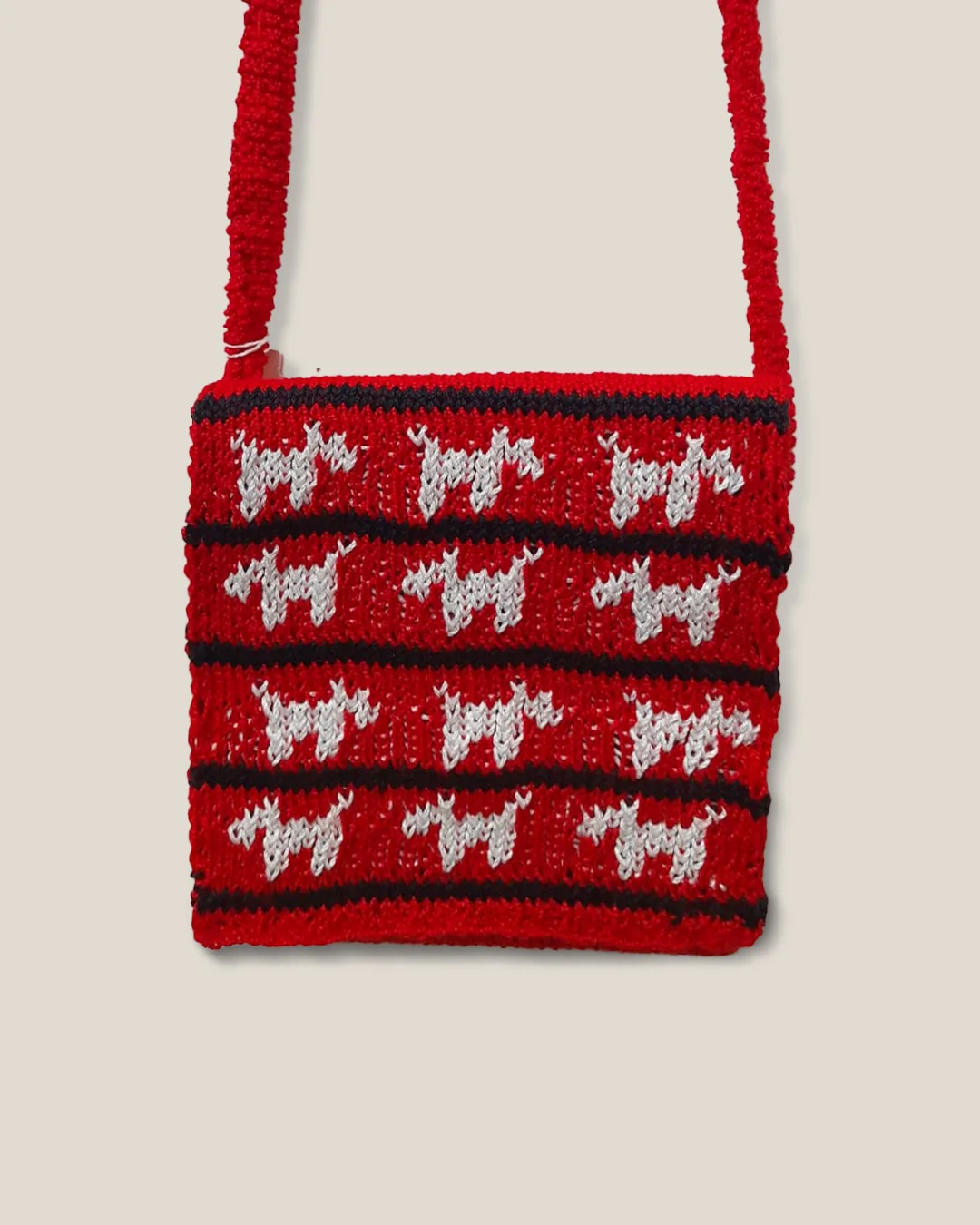
  • A red crochet sling bag with rows of small white dogs worked into the fabric.

    Colourwork

    A second colour, counted out stitch by stitch, so the motif is part of the bag rather than printed on it.

  • A square of blue shell stitch, each fan overlapping the row below.

    Shell stitch

    Fans of stitches that overlap the row beneath, which is what gives the surface its depth.

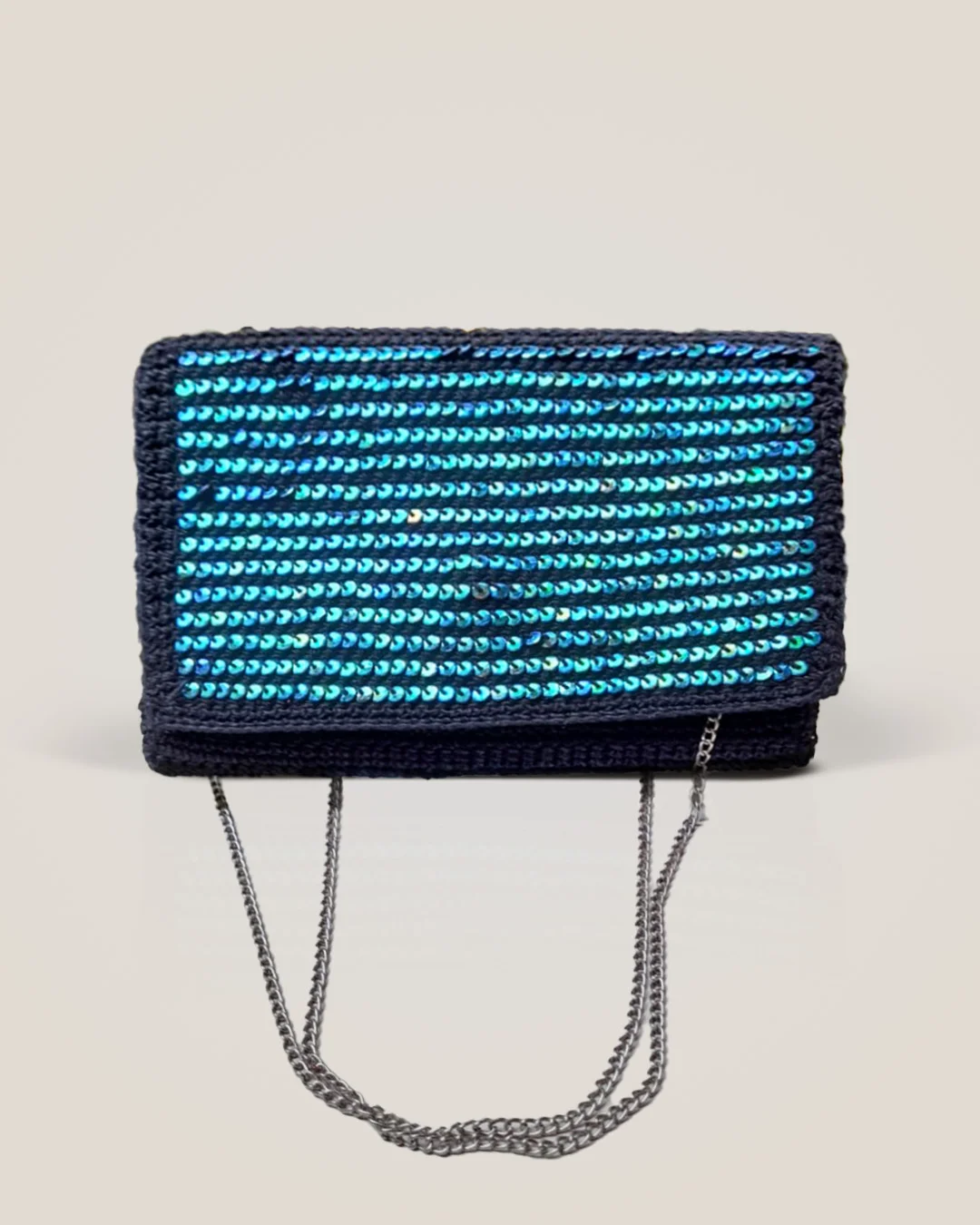
  • A navy crochet clutch with a flap covered in rows of peacock-blue sequins.

    Sequin work

    Rows of sequins run across the flap between rows of stitches, so the light moves across the bag as it moves.

Talk to Shikha

Every piece is a conversation. Message her with a rough idea of what you are looking for and she will take it from there.

Message on WhatsApp

Or call or text: +91 98919 96650

Message on WhatsApp